
Opening Verdict
There is a particular kind of adult platform that feels like it was built by people who genuinely believed the work deserved better than a webcam and a ring light, and Digital Playground is probably the clearest surviving example of that impulse. It earns real admiration for the quality of what it produces, and real frustration for what surrounds that quality. Whether the subscription justifies itself depends almost entirely on how much you value craft over catalogue depth.
What Digital Playground Is, and Who Stands Behind It
Digital Playground launched in 1993, which in internet years makes it something close to ancient. The studio built its reputation through the 1990s and 2000s on a specific and then-unusual proposition: adult films that looked like they had actual production budgets behind them. Lighting rigs. Location shoots. Narrative arcs that lasted longer than the scene they were framing. The studio became known for feature-length releases that leaned into genre filmmaking, borrowing the grammar of Hollywood action and thriller productions and applying it to adult content in ways that were, by the standards of the industry, genuinely ambitious.
The company was acquired by Manwin, now operating as MindGeek, in 2012. MindGeek is the Montreal-based parent company that also controls Pornhub, Brazzers, Reality Kings, and a significant portion of the broader adult entertainment infrastructure. The acquisition brought Digital Playground under a large corporate umbrella, and the platform today sits within that ecosystem, sharing some backend architecture while maintaining its own distinct brand identity and content library.
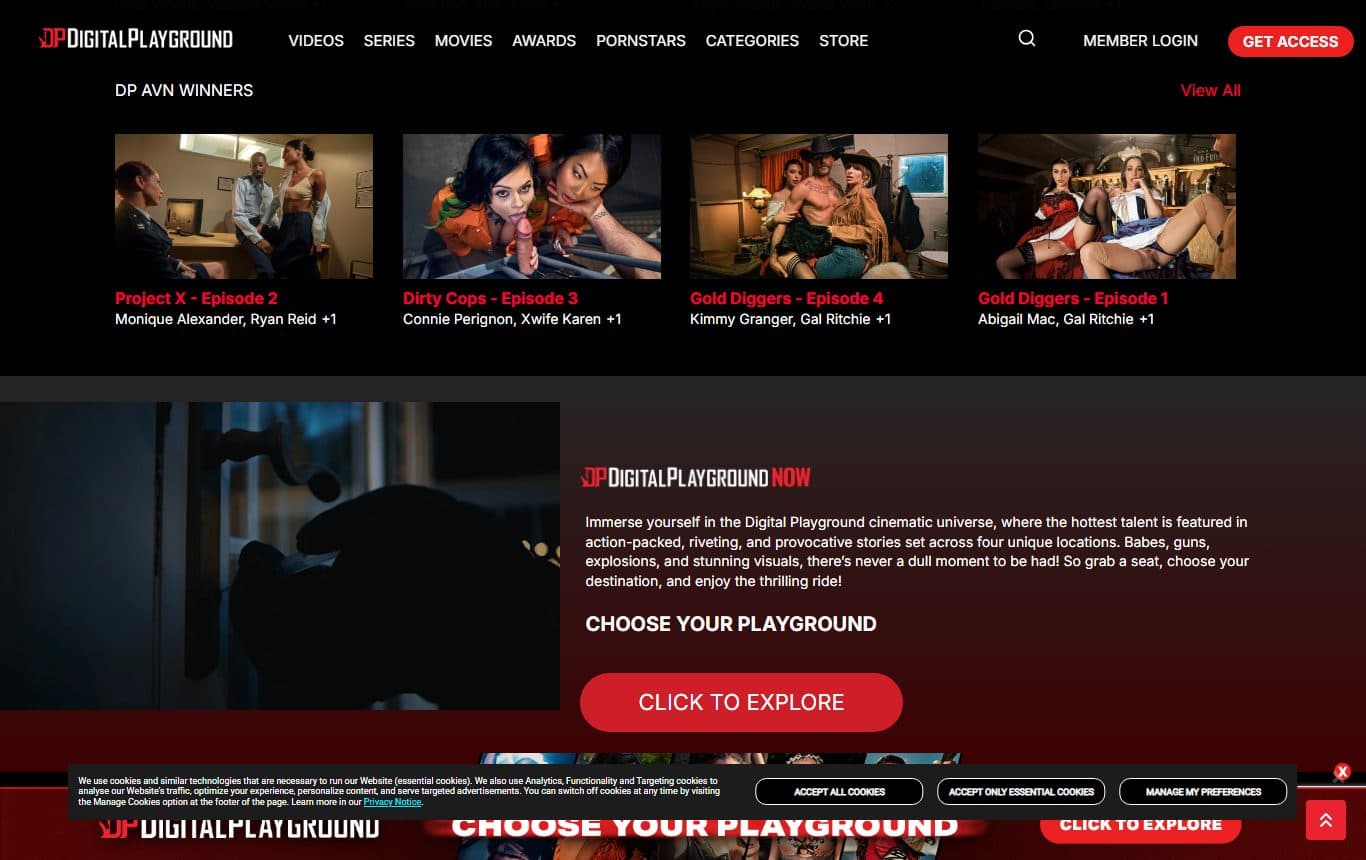
The studio has accumulated a meaningful award history over the decades, with recognition from industry bodies including the AVN Awards and XBIZ Awards across categories ranging from best picture to technical achievement. That back catalogue is the real asset here, and understanding that is central to understanding whether a subscription makes sense for any given person.
The Experience of Using It
Design and Navigation
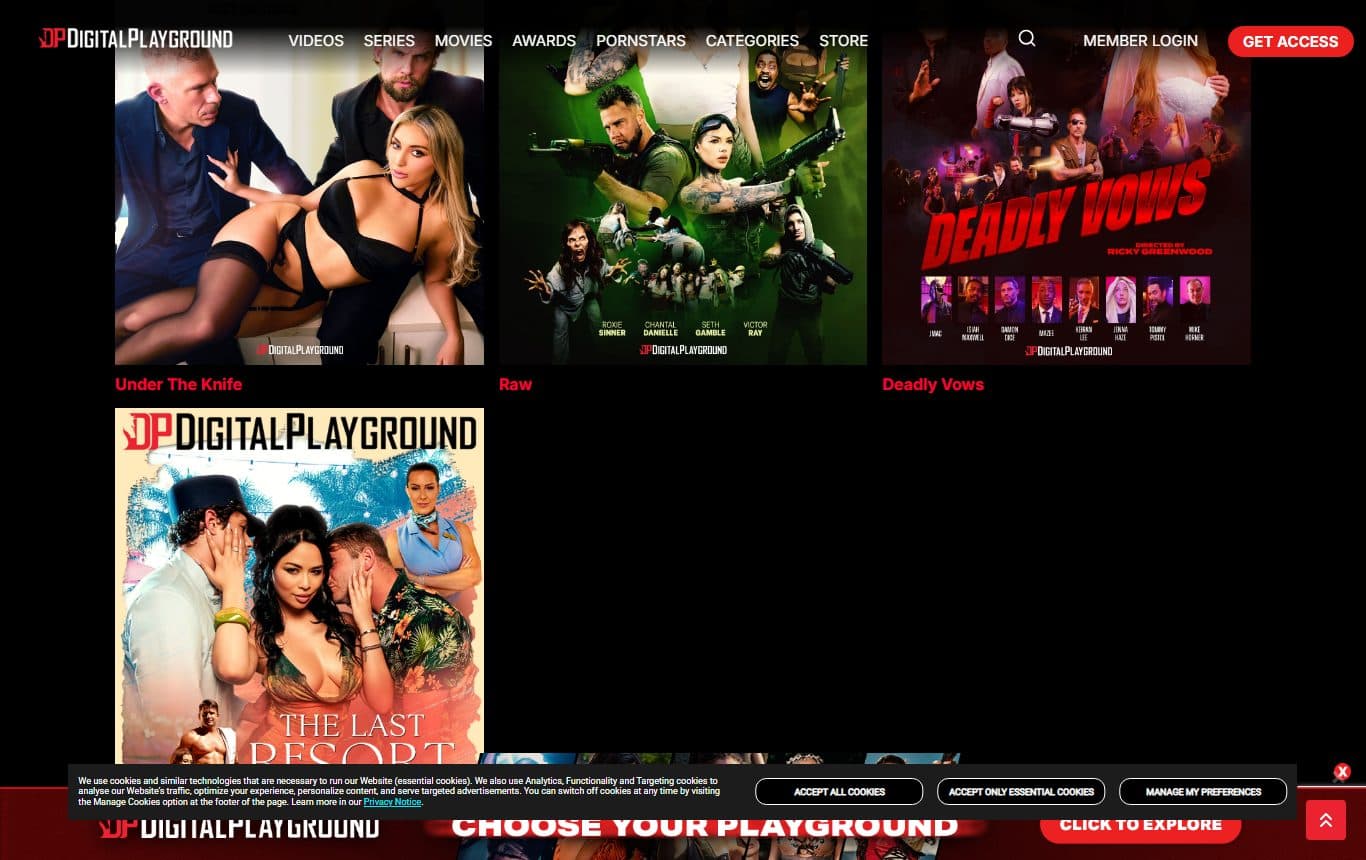
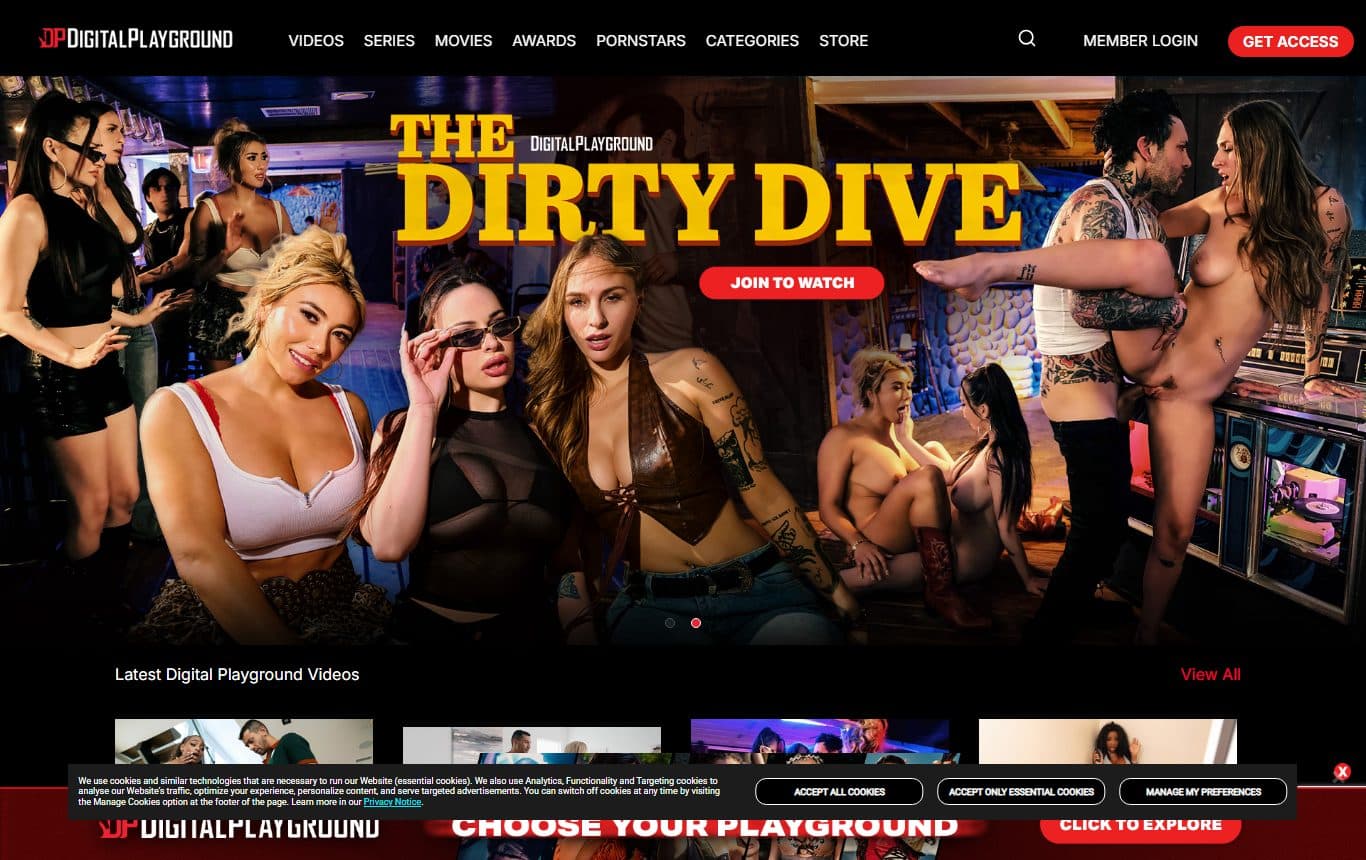
Public user sentiment around the Digital Playground interface is mixed in ways that feel consistent across review aggregators and forum discussions. The site functions, and it functions well enough that nobody is writing angry posts about broken pages or videos that refuse to load. But "functions well enough" is doing a lot of work in that sentence. The design has the feel of something that has been updated incrementally rather than rethought, with a layout that prioritizes the catalogue grid over any sense of editorial curation or discovery. If you know what you are looking for, you will find it. If you are browsing without a specific performer or title in mind, the experience can feel a little flat.
Search is serviceable. Filtering by performer, category, and release date works as expected. There is no particularly sophisticated recommendation engine, nothing that learns what you have watched and surfaces related work in a way that feels thoughtful. The platform lists a library of content that runs into the thousands of scenes and features, though the studio's philosophy has always favored depth of individual productions over raw volume, so the number of distinct titles is smaller than platforms that prioritize quantity.
Content Quality and Production Philosophy
This is where Digital Playground genuinely separates itself, and it is worth spending some time here because it is the whole argument for the subscription. The studio's feature productions are a different category of thing from the majority of adult content available online. The "Pirates" series, released in the mid-2000s, became something of a cultural reference point, cited regularly in discussions about production ambition in adult filmmaking, with set construction, costuming, and action sequences that were taken seriously as craft. That series and others like it represent a strand of the catalogue that holds up as genuine genre filmmaking within its medium.
More recent productions continue in that tradition, with location-based shoots, professional cinematography, and a consistent visual grammar that distinguishes the work from studio-floor content. Performers are given material that has some shape to it, scenes that exist within a context, even when that context is genre-thin. Aggregated viewer feedback consistently notes the production values as the primary reason people subscribe and the primary reason they stay.
The trade-off is update frequency. The platform does not publish content at the volume of a network site. For subscribers who measure value in new content per week, this is a real limitation that comes up repeatedly in user discussions. The catalogue is strong, but it is not endlessly refreshed in the way that some competitors prioritize.
Streaming and Download
The platform advertises HD streaming across its library, and the technical delivery of that content is generally reported as reliable by users across forum discussions and review threads. Download options exist for subscribers, which matters for people who prefer offline access or have variable connection quality. No significant widespread complaints about video delivery appear in aggregated public sentiment, which is itself a form of praise for infrastructure that often goes unnoticed when it works.
Mobile Experience
Mobile access runs through the browser rather than a dedicated app, which is consistent with how most adult platforms operate given app store restrictions on explicit content. The mobile site is reported as functional, and the video player handles portrait and landscape viewing without significant complaint in user feedback. It is not a native app experience, and people who have strong preferences for app-based media consumption will notice that absence.
Pricing, Billing, and the Parts Worth Reading Carefully
What You Actually Pay
The pricing structure is straightforward on its face. There is a free trial that allows access to a portion of the library, designed to give prospective subscribers a sense of the production quality before committing. The recurring monthly subscription runs at $29.99 per month, which sits at the higher end of the adult platform pricing range. An annual plan brings that effective cost down to approximately $9.99 per month, which is a substantial reduction and the option most frequently recommended in user discussions for anyone who has already decided the platform suits them.
The gap between monthly and annual pricing is significant enough that it functions as a real decision point. Paying monthly for several months while deciding is noticeably more expensive than committing to the annual plan upfront, and the math becomes obvious quickly.
Billing Practices and What Users Report
This is where the review needs to be direct about something, because it comes up consistently enough in public user feedback to be treated as a real pattern rather than isolated complaint. Cancellation processes on MindGeek-operated platforms have historically attracted criticism for being less intuitive than the signup process, with some users reporting that finding the cancellation pathway required more navigation than felt reasonable. This is not unique to Digital Playground, and it is not unique to adult platforms, but it is worth naming plainly because it affects real people's bank statements.
The practical guidance that appears repeatedly in user discussions is to cancel before a renewal date rather than on it, to document the cancellation confirmation, and to check billing statements in the days following a cancellation to confirm it has processed. The free trial, specifically, has generated enough comments about unexpected charges that treating the trial-to-paid transition as something requiring active management is simply prudent.
None of this is unusual in the subscription software landscape broadly, but the adult industry's billing practices have historically received less mainstream consumer protection scrutiny, which makes it worth raising here more explicitly than a review of, say, a streaming music service might bother to do.
How It Compares to Close Alternatives
Brazzers
Brazzers is the most direct comparison point, partly because it shares a parent company and partly because it occupies the premium end of the same market. Brazzers publishes content at a higher volume and updates more frequently, which makes it a stronger choice for subscribers who value a steady stream of new material. The production quality is high but operates in a different register, leaning toward performer-focused scenes rather than narrative features. For someone who wants cinematic ambition and a back catalogue with genuine genre filmmaking in it, Digital Playground is the more distinctive choice. For someone who wants volume and variety, Brazzers has the edge.
Wicked Pictures
Wicked Pictures is a closer philosophical sibling, having built its own reputation on feature-length productions and a commitment to narrative structure. The two studios have competed in the same awards categories for decades, and comparing their catalogues is a legitimate exercise for anyone who values this style of production. Wicked's library has its own distinct tone and roster of performers. Subscribers who care deeply about feature filmmaking within adult entertainment would not be wrong to consider both.
Niche and Creator Platforms
OnlyFans, Fansly, and similar creator-driven platforms represent a genuinely different value proposition rather than a direct competitor. They offer parasocial connection, direct performer interaction, and content that is often raw and immediate rather than produced and polished. Some audiences want exactly that, and no amount of production budget from Digital Playground addresses that preference. The two things are serving different needs, and it is worth being clear about that rather than treating them as interchangeable.
Who Should Subscribe and Who Should Skip It
The Right Audience for Digital Playground
Someone who finds genuine pleasure in adult content that has been made with visible care, where the cinematography has been considered and the scene exists within a context that gives it some shape, will find Digital Playground's catalogue rewarding in ways that are difficult to replicate elsewhere at this price point. The back catalogue alone, particularly the feature productions from the studio's peak years, represents a body of work that holds a specific place in the history of adult filmmaking. If that sounds like your kind of thing, the annual plan at roughly ten dollars a month is reasonable for what you are getting.
The platform also suits someone who watches adult content the way they watch other media, returning to specific titles, exploring a performer's body of work, treating it as something worth engaging with rather than consuming and discarding. The catalogue rewards that mode of engagement more than it rewards the person who wants something new every day.
Who Should Look Elsewhere
If volume and update frequency are your primary metrics, this platform will disappoint you. The catalogue is not small, but it is not growing at the pace of a network that publishes multiple scenes daily. If you are paying month to month and expecting a steady stream of new content to justify the $29.99 recurring charge, the math is likely to stop working in your favor fairly quickly.
If your tastes run toward amateur aesthetics, POV content, or the kind of raw immediacy that creator platforms specialize in, Digital Playground's production values will feel like the wrong kind of distance. The polish that is an asset for some viewers is a liability for others, and there is no shame in knowing which kind of viewer you are.
Budget-conscious subscribers who do not have a specific interest in cinematic production will find comparable or better value elsewhere in the MindGeek network or on platforms with different business models entirely.
Final Verdict
Digital Playground is a platform that has earned its reputation honestly, over decades, through a consistent commitment to making adult content that takes its own production seriously. The award-winning back catalogue is real, the cinematic features are genuinely distinctive within the genre, and the studio's best work represents something that does not have many equivalents at any price point. That is not nothing. In fact, for the right subscriber, it is quite a lot.
The frustrations are real too. The interface does not flatter the catalogue it houses. The update cadence will leave high-volume viewers cold. The billing practices warrant the kind of careful attention that no one should have to give to a streaming subscription, but that the pattern of user feedback suggests is simply necessary here.
At $9.99 a month on the annual plan, for someone who values craft and has a genuine interest in feature-length adult filmmaking as a form, the subscription is defensible and probably worthwhile. At $29.99 a month recurring, the value calculation becomes much harder to make work unless the catalogue is something you are actively and regularly returning to. The platform is not trying to be everything to everyone, and it succeeds on its own terms more than it fails. Know your own terms first, and this review should give you enough to decide whether they match.