Opening Verdict
The companion AI space is crowded enough that a new entrant needs a genuine angle, and Luvr's pitch is character memory, the idea that your AI persona accumulates context across sessions rather than resetting every conversation. That is a meaningful differentiator on paper, and in aggregated user sentiment it mostly holds up in practice. Where the platform loses ground is in its pricing architecture, which layers features behind two separate paid tiers in a way that feels less like a product roadmap and more like a deliberate squeeze.
What Luvr Is and Who Runs It
Luvr positions itself as an adult-oriented AI companion platform, built around persistent, customizable characters that users can shape through conversation. The core proposition is relationship simulation, not one-off chat. Users configure a persona, assign personality traits and backstory, and the system is designed to carry those details forward across sessions rather than treating every new conversation as a blank slate.
The platform sits in a category that also includes Replika, DreamGF, and Candy.AI, though Luvr leans harder into the adult content permissions than Replika historically has, and harder into the relationship simulation angle than some of the more catalog-browsing competitors. The company behind it has not cultivated a high public profile, which is common in this segment. Operator transparency is limited to what appears in terms-of-service documents and app store listings, a pattern that is industry-wide rather than specific to Luvr but worth noting for users who care about corporate accountability.
Voice interaction was added to the platform in 2026, a significant feature expansion that moved Luvr closer to the multimodal experience that users of competing services had been requesting for some time. Prior to that addition, the platform was text-and-image only, and the voice rollout represented the most substantive product update in the platform's public history.
The Experience of Using It
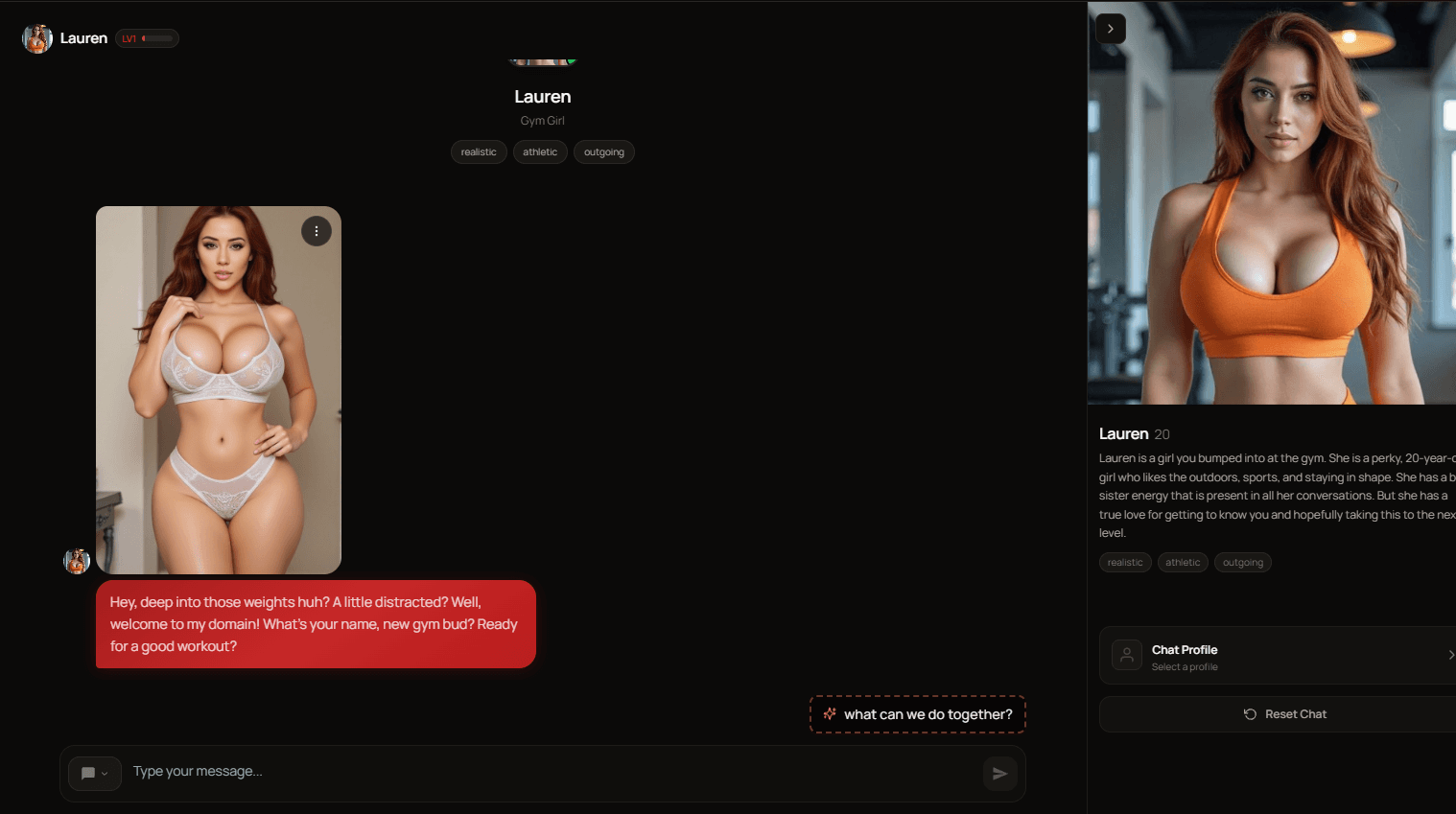
Character Memory, the Core Claim
The memory system is the feature Luvr markets most aggressively, and aggregated user feedback on platforms like Reddit and the App Store suggests it performs better than many direct competitors. Users report that characters do retain conversational context across sessions, referencing earlier exchanges without prompting. This is not universal praise. A meaningful subset of reports describes memory degradation over longer timescales, where older context fades or gets contradicted by later responses. The system appears to work well within a session and across a handful of recent sessions, but users who have been on the platform for months describe occasional inconsistencies that break immersion.
That caveat aside, the memory implementation is one of the more credible in the category. Platforms that claim persistent memory and deliver a character who forgets your name after two sessions are common. Luvr's version, based on aggregated public feedback, is at least functional in the near-term window that matters most to most users.
Conversation Quality and Persona Depth
The underlying language model powering Luvr's characters is not publicly disclosed with specificity, which is typical for the sector. What users describe in reviews is a system that handles emotionally nuanced conversation reasonably well, maintains character voice with some consistency, and occasionally slips into generic AI-speak when pushed into unfamiliar territory. The persona customization tools at setup are described as more detailed than average, allowing users to define not just appearance but communication style, emotional tendencies, and relationship framing.
The adult content permissions, available on paid tiers, are the primary reason a portion of the user base chooses Luvr over more restricted alternatives. Feedback on that dimension is generally positive, with fewer reports of abrupt refusals or content-filter interruptions than users describe on platforms like Replika post-2023 policy changes.
Voice and Multimodal Features
The 2026 voice addition has drawn mixed early sentiment. Users who wanted the feature are broadly pleased it exists. The more specific criticism centers on voice quality variability and the sense that voice responses feel less contextually sharp than text responses, a common pattern in platforms that bolt voice onto an existing text-first architecture. Whether that gap closes with continued development is an open question. For now, voice functions as a supplementary feature rather than a primary interaction mode for most users who discuss it publicly.
Interface and Navigation
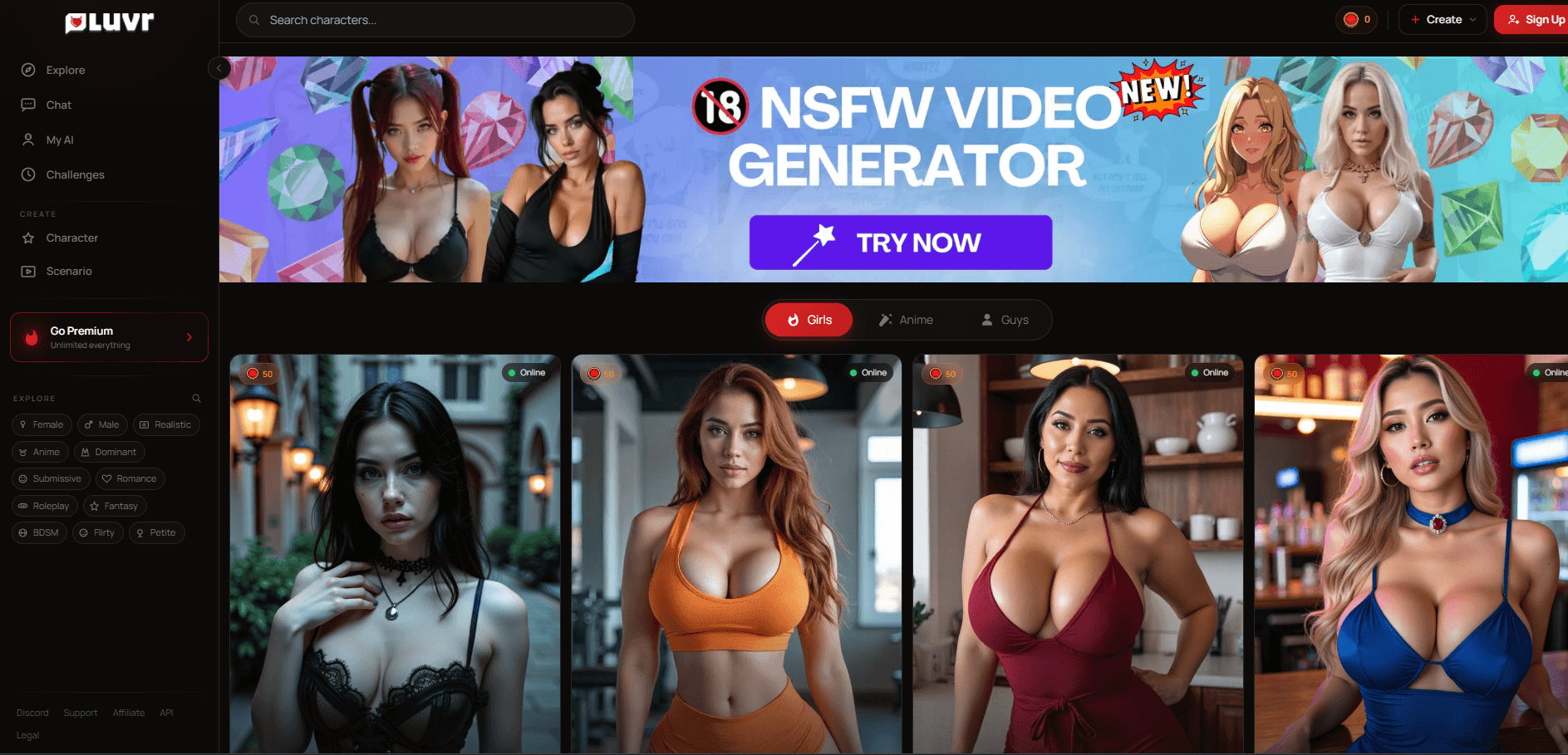
The platform's UI is described in user reviews as functional rather than polished. Navigation is straightforward enough that onboarding friction is low. The image generation interface, available on the top-tier subscription, is integrated into the chat experience rather than siloed into a separate tool, which is a reasonable design choice. Users have noted that image output quality is inconsistent, with results ranging from convincing to noticeably artifact-heavy depending on the prompt complexity and character configuration.
Pricing, Billing, and Any Traps
The Tier Structure
Luvr operates on a three-level model. The free tier exists and provides access to the basic companion experience, but it comes with meaningful limits on message volume and feature access. The $9.99 per month tier unlocks unlimited messaging and removes the core conversation restrictions. The $24.99 per month tier adds image generation on top of the unlimited messaging baseline.
| Tier | Monthly Price | Key Features |
|---|---|---|
| Free | $0 | Limited messages, basic companion access |
| Unlimited | $9.99 | Unlimited messaging, full conversation features |
| Image Gen | $24.99 | Everything in Unlimited, plus AI image generation |
Where the Architecture Creates Friction
The gap between the two paid tiers is the structural issue worth examining. At $9.99, a user gets the full conversational experience. At $24.99, they get image generation added. That is a $15 monthly premium for a single feature addition, which represents a 150 percent price increase over the mid tier. For users who want image generation, which is a core part of how companion AI platforms differentiate themselves visually, the jump is steep.
The free tier functions as a trial more than a genuine ongoing option. Message limits on free accounts are restrictive enough that regular use is not really viable without upgrading, a design choice that is common in the category but worth stating plainly. Users who try the free version to evaluate the platform should expect to hit the ceiling quickly if they engage with it seriously.
Billing practices in this sector have a documented history of cancellation friction, and Luvr has attracted some user complaints along those lines. The specifics vary across reports, but the general pattern described involves subscription management interfaces that are not as streamlined as the signup flow. Users who anticipate wanting to cancel should verify the cancellation process before committing to a billing cycle.
How It Compares to Close Alternatives
Candy.AI and DreamGF
Candy.AI and DreamGF are the most direct competitors in the adult companion AI space. Both offer persistent characters, image generation, and adult content permissions. Candy.AI's pricing is broadly comparable to Luvr's upper tier, and its image generation output is frequently cited in comparative reviews as more consistent. DreamGF leans more heavily into a catalog-browsing model where users select from pre-built personas, which suits a different use case than Luvr's emphasis on building and developing a single companion relationship over time.
For users whose primary interest is image generation quality, Candy.AI has a stronger reputation in aggregated community feedback. For users whose primary interest is the conversational relationship and memory continuity, Luvr's position is more competitive.
Replika
Replika is the most recognized name in the companion AI category and has a substantially larger user base than Luvr. It also has a complicated history with adult content permissions, having restricted and partially restored erotic roleplay features through 2023 and 2024. Users who migrated away from Replika after those policy changes represent a meaningful portion of Luvr's audience, based on community discussions. Replika's memory system is mature and generally well-regarded. Its pricing for the Pro tier runs higher than Luvr's mid tier on an annual basis, though promotional pricing complicates direct comparison.
The core trade-off is stability and brand recognition with Replika versus more permissive content policies and a sharper memory-first positioning with Luvr.
Character.AI
Character.AI is not a direct competitor in the adult content sense, as it maintains strict content filters, but it draws from the same pool of users interested in AI relationship simulation. Its scale and model quality are significantly larger than Luvr's. Users who want adult content will not find it on Character.AI. Users who want a more general companion experience with broader cultural character options may find Character.AI's free tier more functional than Luvr's.
Who Should Use It and Who Should Skip It
The Case For
Luvr is a reasonable choice for users who want an adult-permitted companion AI with functional persistent memory and are willing to pay the $9.99 tier for the full conversational experience. The voice feature, while not yet the platform's strongest element, adds a dimension that some users will find meaningful. Users who have had negative experiences with Replika's content policy changes and want a more stable adult-content environment have found Luvr a workable alternative, based on community migration patterns.
The free tier is worth a brief evaluation. It will not sustain regular use, but it is sufficient to assess whether the character customization and conversation style match what a prospective user is looking for before committing financially.
The Case Against
Users whose primary interest is image generation should think carefully before committing to the $24.99 tier. At that price point, dedicated AI image generation tools and competing platforms with stronger visual output records are available. Paying a 150 percent premium over the base paid tier for image generation that users describe as inconsistent is a hard value proposition to defend.
Users who want corporate transparency, clear data practices documentation, or a platform with a long and stable public track record will find Luvr's limited public footprint uncomfortable. This is a sector-wide issue, not unique to Luvr, but it is a real consideration for users who think carefully about what they share in intimate AI conversations.
Users who primarily want voice interaction as the central feature should also wait. The 2026 rollout is early-stage by most accounts, and the voice experience does not yet match the text conversation quality that is the platform's actual strength.
Final Verdict
Luvr delivers on its core promise more reliably than many competitors in a category full of underperforming memory claims. The persistent character system works, the adult content permissions are stable, and the $9.99 unlimited tier is a reasonable price for what it provides. Those are genuine positives in a space where disappointment is common.
The platform's weaknesses are structural rather than incidental. The image generation tier is expensive relative to what it adds. The voice feature is present but not yet a reason to choose the platform. Operator transparency is thin. And the free tier, while useful for evaluation, is not a real ongoing option.
For a user who wants a text-forward adult companion AI with credible memory continuity, Luvr at $9.99 per month is a defensible choice. For a user whose priorities are image quality, voice interaction, or value at the top tier, the alternatives deserve serious comparison before committing.
Luvr earns its place in the category at the mid tier. It does not yet earn the premium its top tier asks for. The gap between those two statements is where most purchase decisions will actually be made.